Boards · 04
From first blink to factory floor.
Same USB‑C, same protection, same IDE — the only thing that changes is the chip.
-
01
SparkStart here.
ESP32‑S3 · 240 MHz dual‑core
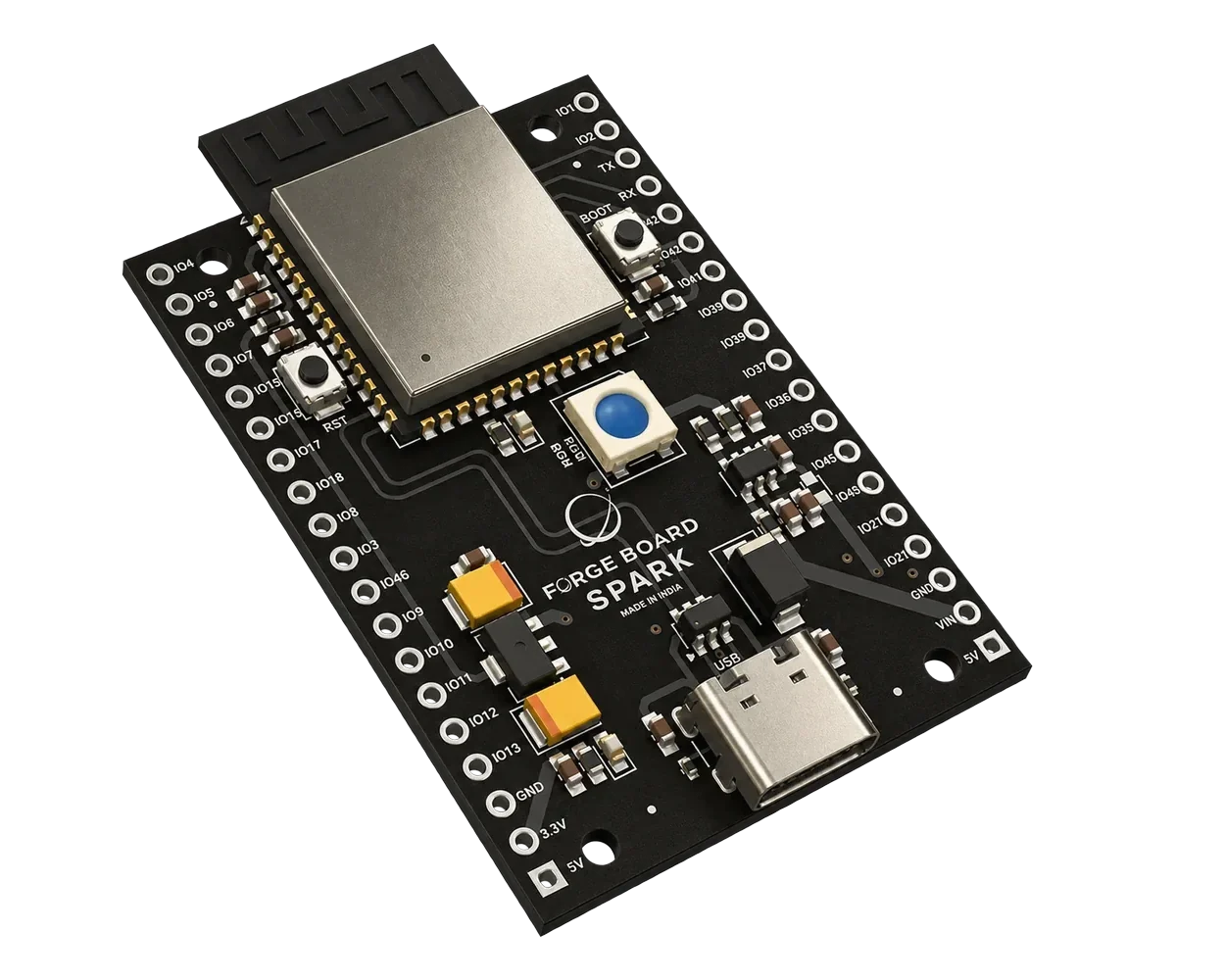
- Breadboard‑friendly, 32 GPIO
- Wi‑Fi & Bluetooth 5.0 built in
- Survives static & reversed power
- USB‑C — no adapter, no driver hunt
- RGB LED for your first “hello”
- One-click flash from the ForgeBoard IDE
-
02
SprintReady before you are.
ESP32‑S3 · 240 MHz dual‑core
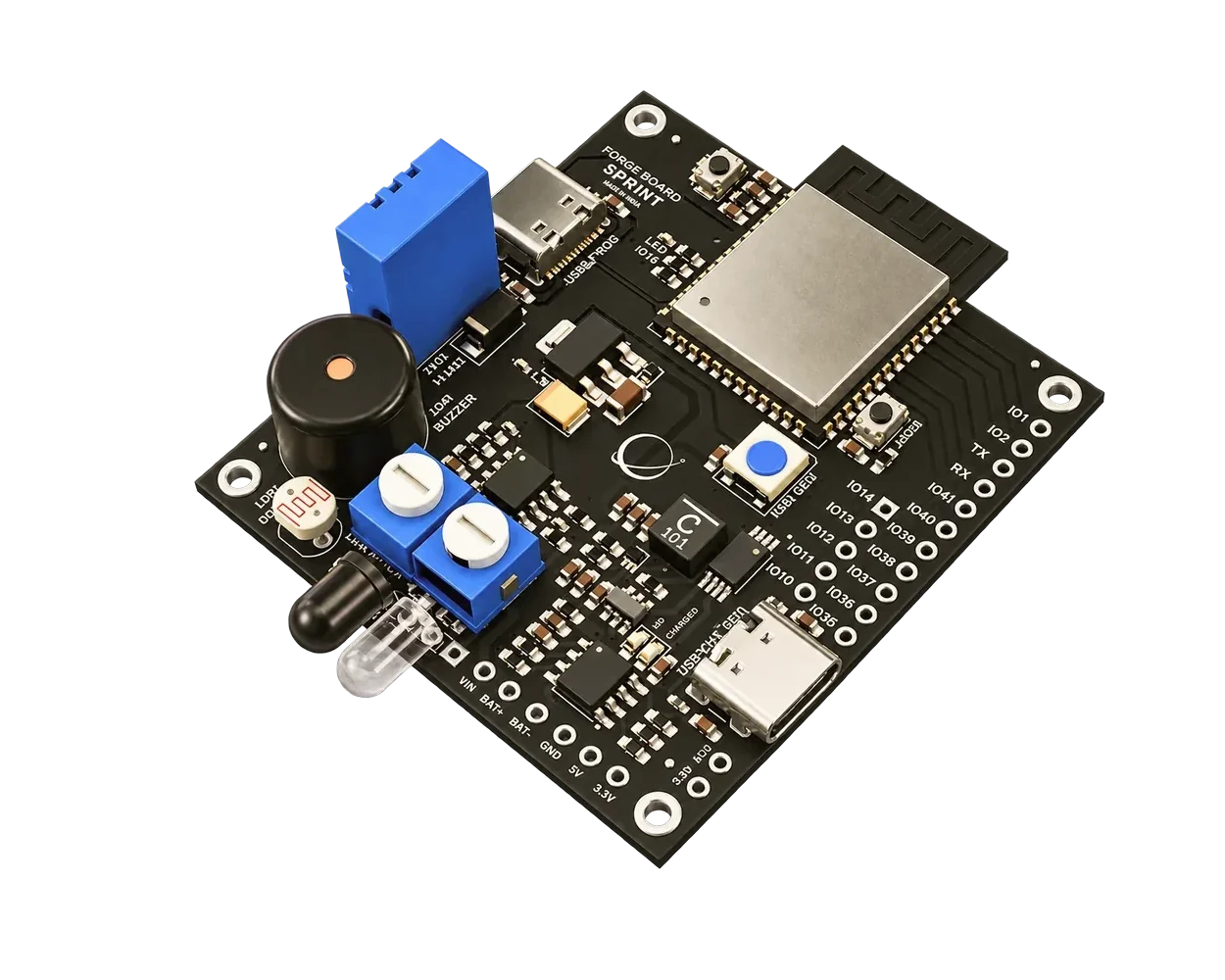
- 4 sensors & a buzzer on board
- Charges a Li‑ion cell — runs unplugged
- Wi‑Fi & Bluetooth 5.0 built in
- 16 GPIO still free for your parts
- USB‑C, ESD & thermal protection
- Updates over the air — Wi‑Fi or BLE
-
03
IndusFor your toughest challenges.
STM32G4 · 170 MHz Cortex‑M4F
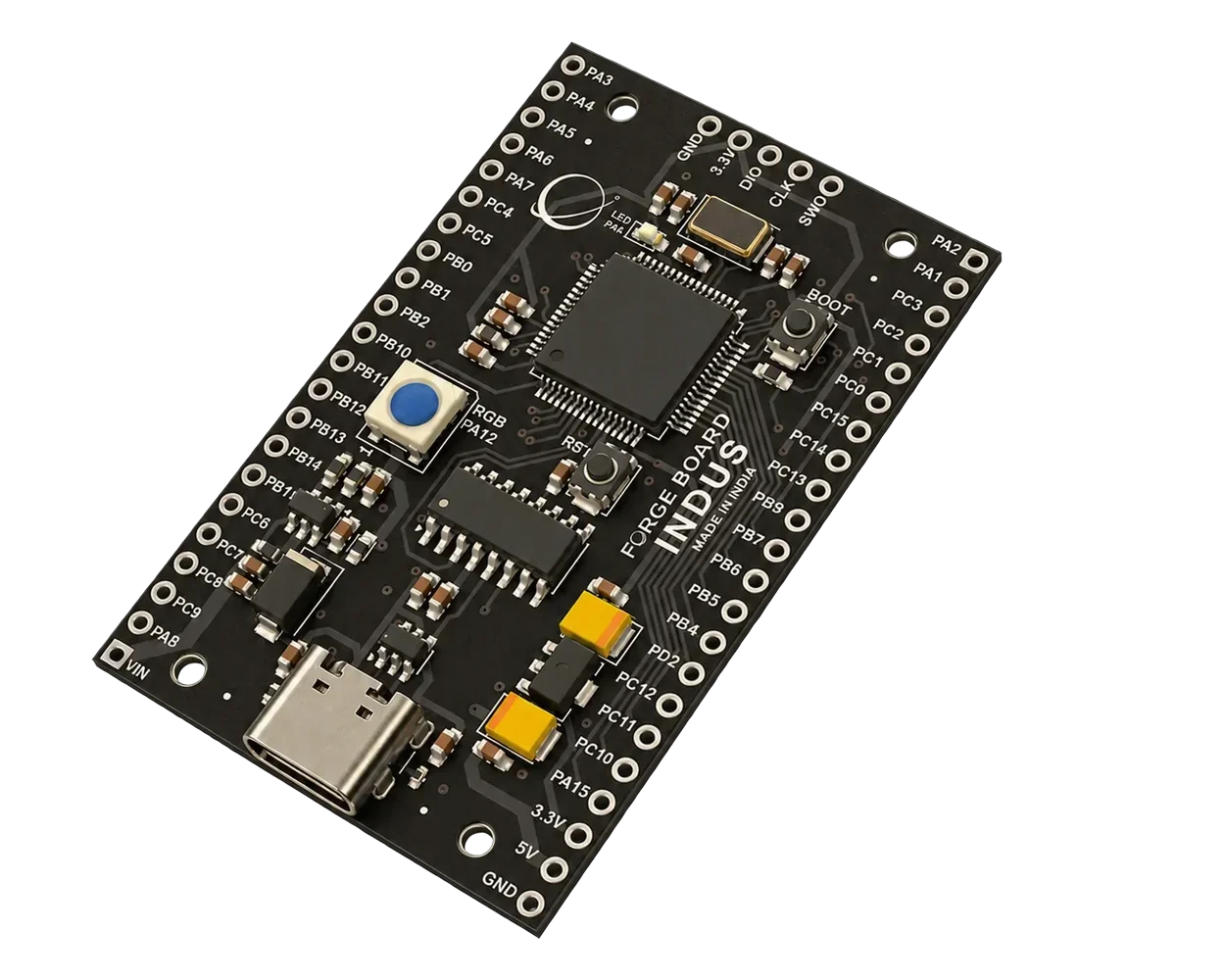
- Rated –40 to +85 °C
- 3 CAN FD buses at 8 Mbit/s
- Encrypts in hardware, AES‑256
- Shrugs off ±15 kV static
- Drives motors with 184 ps timing
- Debug over SWD, 40 GPIO
-
04
FlintSmall board. Long reach.
ESP8266 · 80–160 MHz
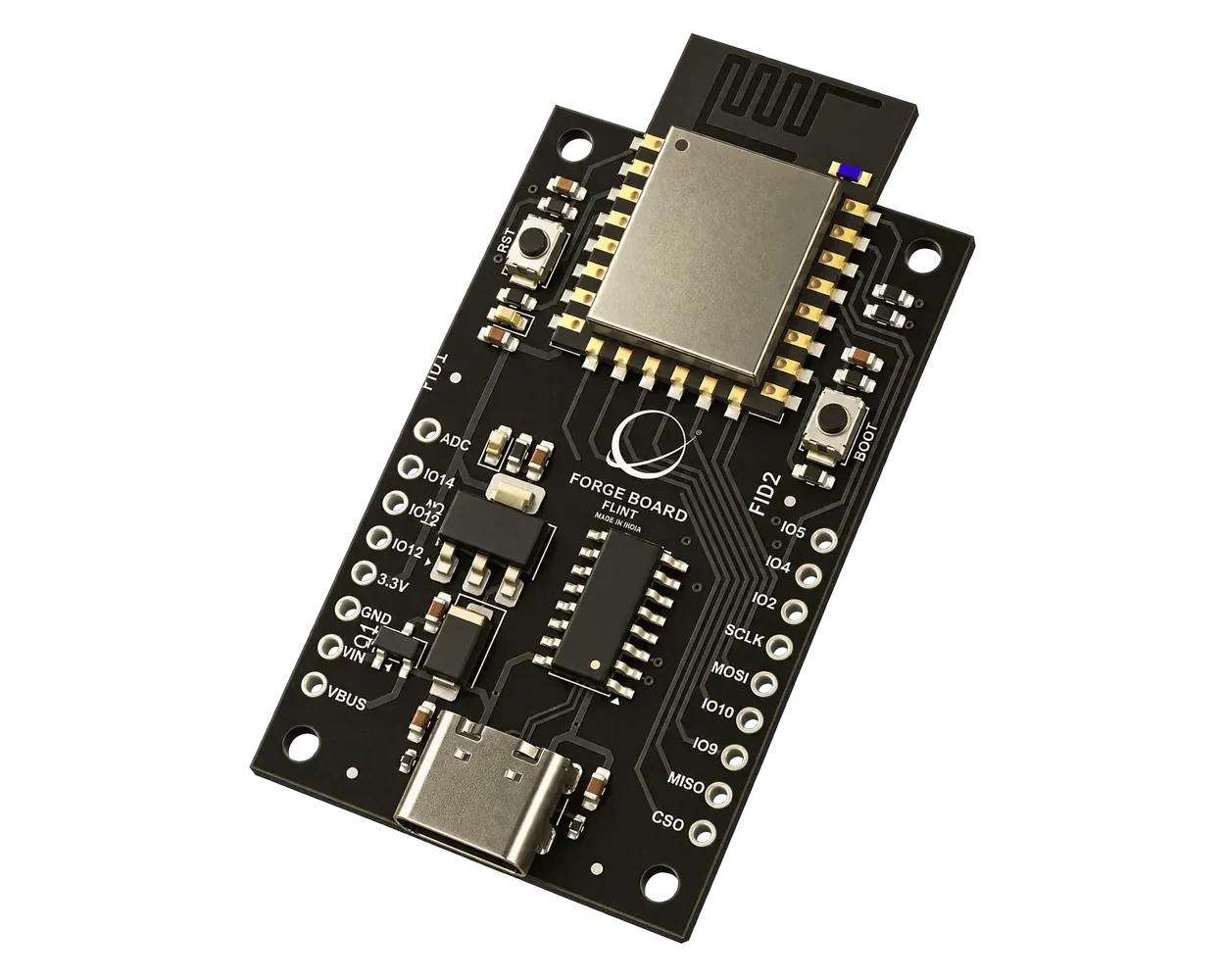
- 50 × 30 mm
- Months on a battery — 20 µA asleep
- Wi‑Fi with +20 dBm on‑board antenna
- USB‑C, no driver hunt
- Reverse‑polarity protected
- Same ForgeBoard IDE as the rest